Band 38 to finally see wide-scale deployment
As part of the VodafoneThree merger there has been a large shake-up to the UK’s mobile network operator’s spectrum holdings.
In October, I discussed Vodafone retuning their B32 L-Band spectrum to allow for O2 to use it. One of the other bands that is seeing a large change is Band 38.
Band 38 (2600MHz TDD) sits in the 50MHz duplex gap (2570MHz-2620MHz) between its FDD counterpart, band 7 (2500MHz-2570MHz uplink, 2620MHz-2690MHz downlink) 1 2.
Starting 2025/08/01, the license for Vodafone’s allocation will be jointly licensed for use by VodafoneThree and VMO2 (Telefonica UK Limited); with VMO2 exclusively licensing this block from 2026/09/30 3 4.
B38 Historical Allocation#
The spectrum was initially auctioned in 2012 alongside the 800MHz and 2600MHz FDD bands.
The licenses in the UK were originally allocated as follows 5:
- 2570MHz - 2595MHz -> EE (via BT subsidiary “Niche Spectrum Ventures Limited”)
- 2595MHz - 2620MHz -> Vodafone UK
The licenses have limitations on the frame structure that can be used. 6
Each allocation also has a 5MHz block that is limited in power compared to the rest of the allocation, this acts as a guard band to the surrounding FDD spectrum.
In October 2020, O2 purchased EE’s 25MHz license to use the spectrum at 2595MHz - 2620MHz 7. To my knowledge, EE had not previously deployed this spectrum on their public network.
Current B38 Deployment#
The initial deployment of band 38 was in Northern Ireland 8. This region of the UK continues to have the largest deployment of this spectrum by far (assumption based on CellMapper trails). It makes sense that O2 would choose to deploy the spectrum here first as they do not have a license to use their 2300MHz holdings and so use 2600MHz TDD as a capacity addition.
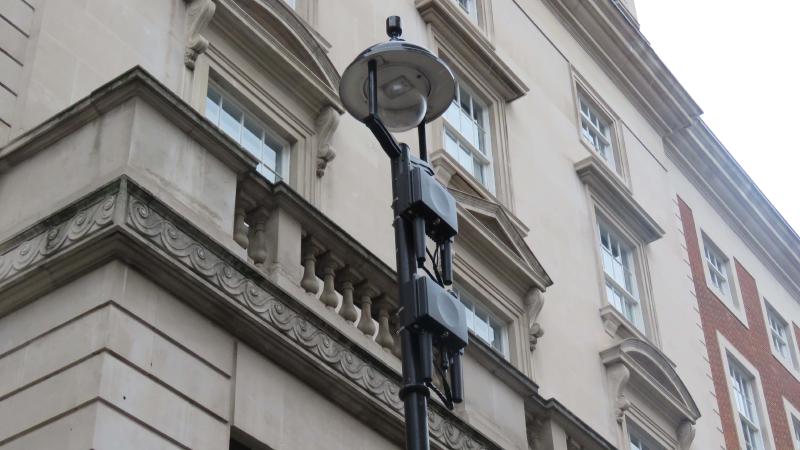
Deployments in the UK mainland have come in the form of Nokia Flexi Zone small cells. The band 38 models look identical to existing band 3 small cells which are a common sight on London street furniture.
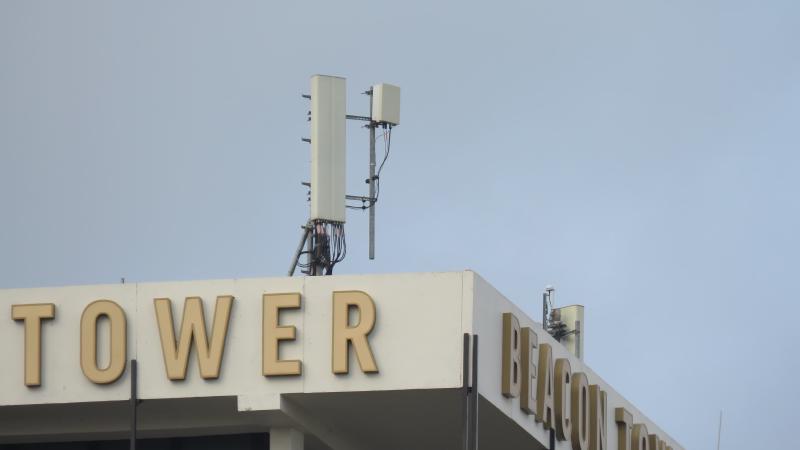
Recently, a Vodafone host deployment of the O2 B38 was spotted in Bristol. The site also has B38 for Vodafone, but in time this will be switched off.
VodafoneThree Merger#
As a result of the VodafoneThree merger, the operator has also been able to acquire Vodafone’s previously rarely deployed 25MHz holding.
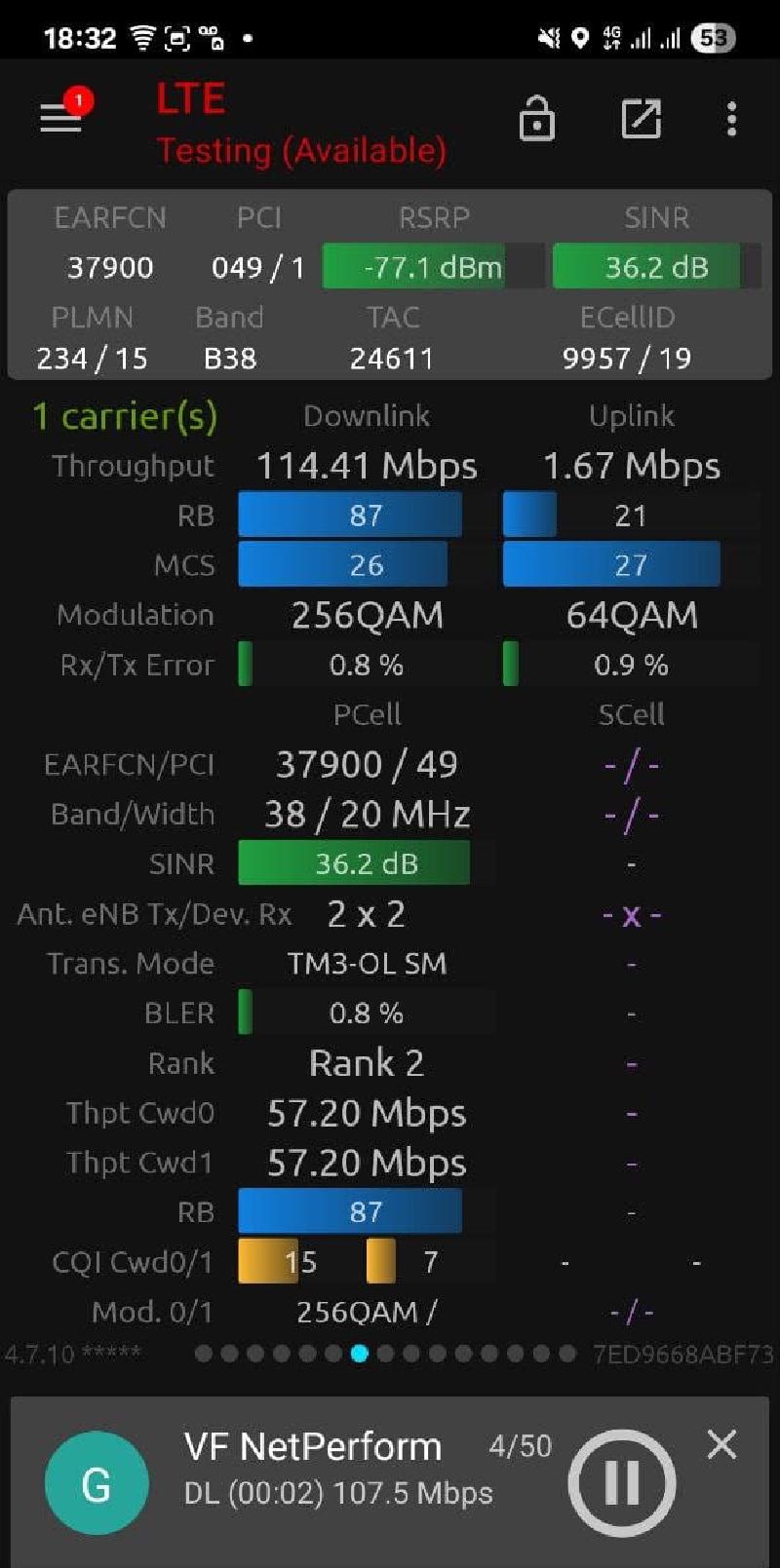
Vodafone regularly used B38 as a capacity addition at major events such as Winter Wonderland9, Reading Festival & Glastonbury.
Vodafone most recently deployed at least 9 sectors of it at Winter Wonderland 2025!
Presumably this will be the last temporary deployment we see of it from Vodafone.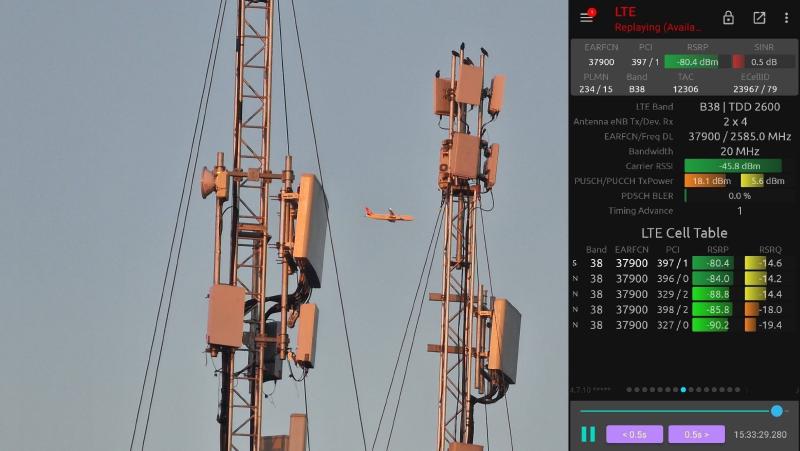
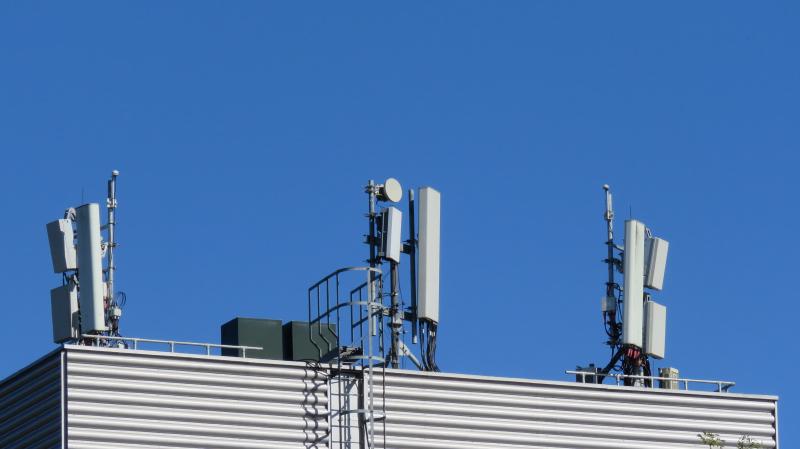
They also had permanent deployments of B38 in major cities such as Birmingham, Bristol, Cardiff, Glasgow, London & Manchester - however these deployments would be limited to a handful of sites.
For example, in Cardiff, there were two sites that received band 38 around 2018/19, the site that served the main university campus, and the site serving the principality stadium. Both sites have now been swapped to Ericsson and have lost their band 38 at the same time.
Future Deployments#
O2 are clearly set to become the mid-band TDD king, with 40MHz in 2300MHz already widely deployed, and 40MHz 2600MHz taking off.
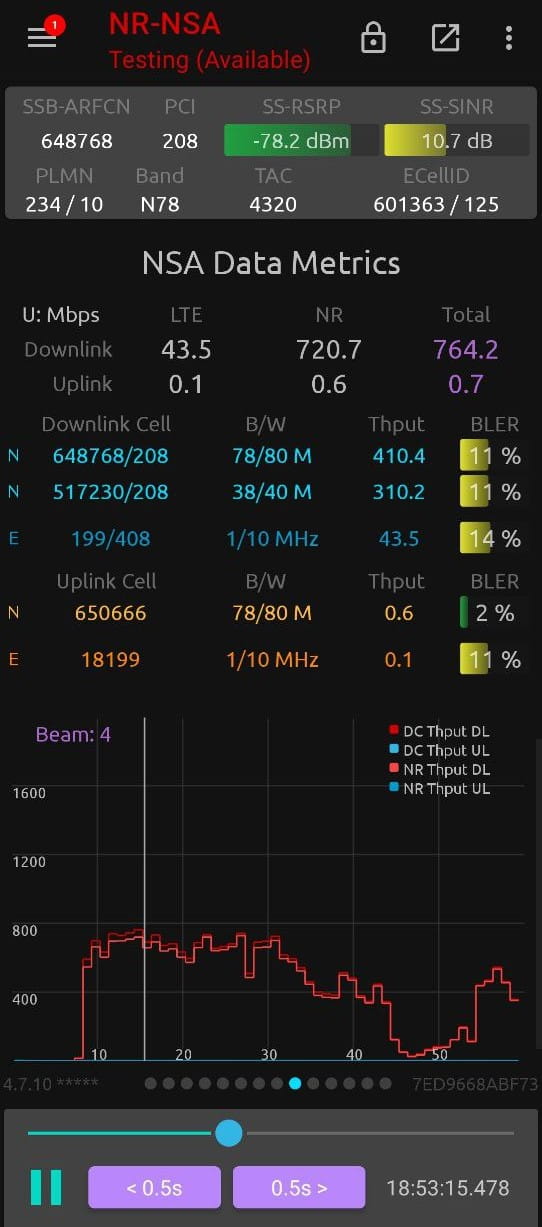
The most recent deployment of B38 by O2 has been in the form of their Nokia “giga-site”10 at Paddington Basin, which had 40MHz n38 alongside 80MHz n78. Which when I tested it using a 5G NSA SIM didn’t result in gigabit speeds, but it was still the fastest O2 performance I’ve personally experienced.
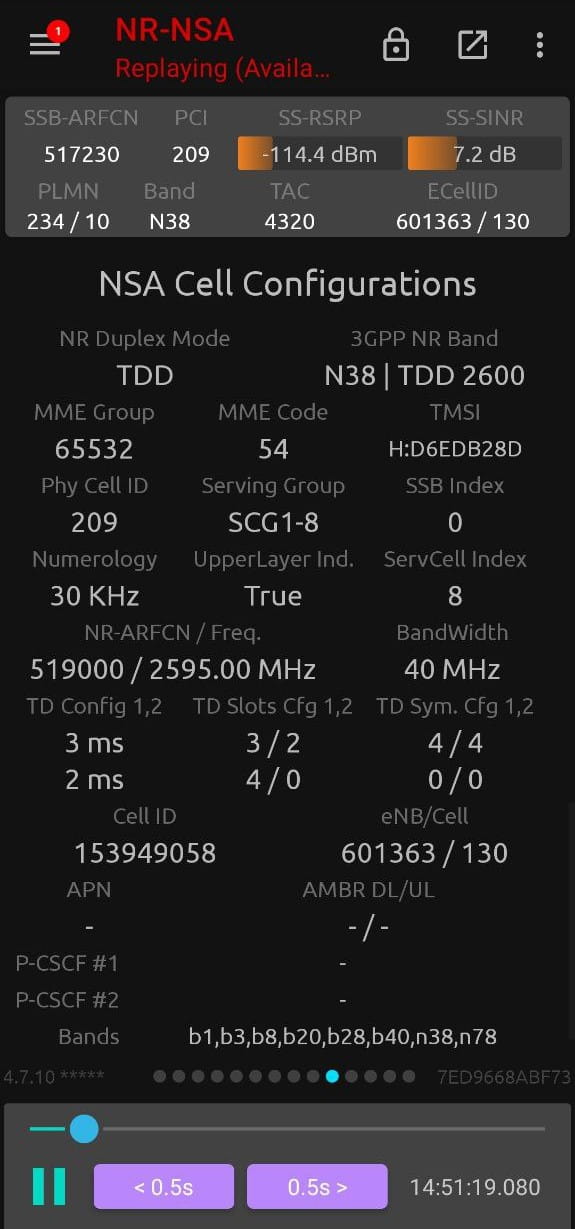
There have also been sightings of dual-band n38 and n78 AAUs in O2 Ericsson regions 11 showing this type of deployment will not be limited to a specific vendor region.
In terms of existing deployments expansion of O2 L26 TDD deployment from a single 20MHz carrier to two 20MHz carriers in Northern Ireland should be a quick-win for O2, since the Ericsson ERS 4418 units are capable enough 12.
Regarding O2’s small cell deployment, the Nokia Flexi Zone FWHW’s that O2 have deployed only support 10, 15 and 20MHz bandwidth operation 13 and so won’t see any uplift from the new spectrum acquisition. O2’s Ericsson small cell deployments use L18+n78 14, so these small cells likely won’t see any changes either.
Summary of 2600MHz TDD over time#
Initial spectrum auction results (March 2013):
- 2570MHz - 2595MHz -> Licensed by EE
- 2595MHz - 2620MHz -> Licensed by Vodafone UK
EE trades their 25MHz block to O2 (November 2020):
- 2570MHz - 2595MHz -> Licensed by VMO2
- 2595MHz - 2620MHz -> Licensed by Vodafone UK
VodafoneThree merger temporary license (August 2025):
- 2570MHz - 2595MHz -> Licensed by VMO2
- 2595MHz - 2620MHz -> Licensed by Vodafone UK & VMO2
O2 will license the entire band from 2026-09-30:
- 2570MHz - 2595MHz -> Licensed by VMO2
- 2595MHz - 2620MHz -> Licensed by VMO2
Maybe I will make diagrams of these in the future…
References#
https://www.ispreview.co.uk/index.php/2025/06/o2-confirms-uk-mobile-boost-as-78-8mhz-of-spectrum-acquired-from-vodafone.html ↩︎
https://www.ofcom.org.uk/siteassets/resources/documents/spectrum/spectrum-information/4g-final-results.pdf?v=334392 ↩︎
https://www.ofcom.org.uk/siteassets/resources/documents/manage-your-licence/mobile-wireless-and-broadband/2.3-3.4-ghz/sa-2.6-licence-telefonica-1238565.pdf?v=325449 (See page 8 for Frame Structure) ↩︎
https://telecomlead.com/telecom-services/ee-to-trade-25-mhz-of-spectrum-in-2-6-ghz-band-to-telefonica-97202 ↩︎
https://pedroc.co.uk/content/vodafone-o2-temporary-sites-winter-wonderland-hyde-park-2018 ↩︎
https://news.virginmediao2.co.uk/virgin-media-o2-set-to-boost-mobile-connectivity-across-the-uk-with-first-of-its-kind-giga-site-switch-on-and-newly-acquired-spectrum/ ↩︎
https://www.youtube.com/watch?v=cWCloiPGgO8&t=8m46s (3m24s and 8m46s relevant) ↩︎
https://www.scribd.com/document/583680409/4418-Radio-Description ↩︎
https://www.scribd.com/document/725660704/Flexi-Zone-Micro-BTS-Product-Description?v=0.755 (page 113) ↩︎
https://www.linkedin.com/posts/peter-clarke-95016b172_standout-in-small-cell-5g-standalone-5g-activity-7255529937510584323-vfla ↩︎
There are no articles to list here yet.